Cast iron cookware is built to last — quite literally for generations. But that longevity depends on one critical factor: proper seasoning and care. If you've just invested in a cast iron skillet set, here's everything you need to know to keep it performing beautifully for decades.
What Is Seasoning?
Seasoning is the process of baking oil into the iron to create a natural, non-stick surface. Each time you cook with oil in your skillet, you're adding to that seasoning layer. Over time, a well-maintained skillet develops a dark, glossy patina that rivals any synthetic non-stick coating — without the chemicals.
Seasoning a New Skillet
If your skillet came pre-seasoned (like our Hometown Kountry cast iron sets), you can start cooking right away. But if you want to build an even better base, here's how:
- Wash it: Give the skillet a quick wash with warm water and a soft brush. Dry it thoroughly — every drop.
- Oil it: Apply a very thin layer of vegetable oil or flaxseed oil to the entire surface, inside and out.
- Bake it: Place the skillet upside down in a 450°F oven for one hour. Put foil underneath to catch drips.
- Repeat: For a brand-new skillet, repeat this process 2-3 times to build a solid base.
Daily Cleaning
The golden rule of cast iron: never use soap. Soap strips the seasoning layer you've worked to build. Instead:
- Wash with hot water and a stiff brush or chainmail scrubber
- For stubborn food, add coarse salt and scrub with a half potato
- Never soak cast iron or put it in the dishwasher
- Dry immediately with a towel, then place on a warm stove burner for 30 seconds to evaporate any moisture
Maintenance Tips
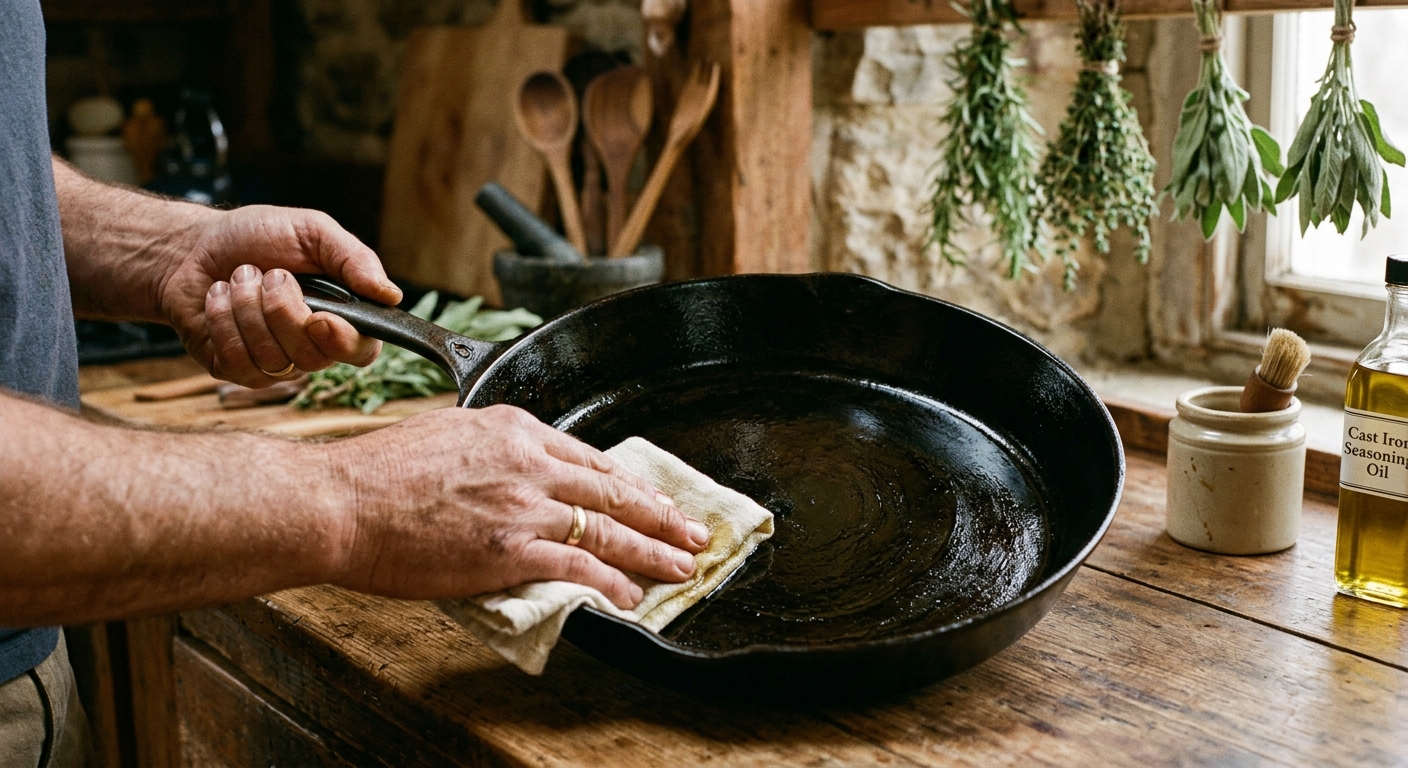
After each cleaning, apply a paper-thin layer of oil to the cooking surface while the skillet is still warm. This maintains the seasoning and prevents rust. Store your skillet in a dry place — if stacking pans, place a paper towel between them to protect the surface.
The best thing you can do for your cast iron is cook with it often. Every meal adds to the seasoning and improves the surface.
What If It Rusts?
Don't panic — rust doesn't mean your skillet is ruined. Scrub the rusted area with steel wool until the metal is exposed, wash with warm water, dry thoroughly, and re-season following the steps above. Your skillet will be as good as new.
Cooking Tips
Cast iron retains heat exceptionally well, so cook on medium or medium-low rather than high heat. Preheat the skillet before adding food — a drop of water should dance on the surface when it's ready. For acidic foods like tomatoes, use a well-seasoned skillet; acid can break down the seasoning on newer pans.
With proper care, your cast iron cookware will outlast most things in your kitchen — and it'll only get better with age.