Reclaimed wood furniture has become increasingly popular, and for good reason. Each piece carries history, character, and a sustainability story that new wood simply can't match. But what should you know before investing in reclaimed wood furniture for your home?
What Makes Wood "Reclaimed"?
Reclaimed wood comes from old structures — barns, factories, warehouses, even wine barrels — that have been carefully dismantled. The wood is then cleaned, dried, and milled into furniture. Because this wood has spent decades (sometimes over a century) aging, it's denser, drier, and more stable than newly harvested lumber.
Why Choose Reclaimed Wood?
- Character: Every board has unique grain patterns, knots, nail holes, and color variations that tell a story. No two pieces are identical.
- Durability: Old-growth wood is denser and harder than wood from fast-growing modern forests. It resists warping and splitting better.
- Sustainability: Reclaimed wood gives new life to material that would otherwise be discarded, reducing demand for new timber.
- Stability: Wood that has been aging for decades has already expanded and contracted through countless seasons, making it more dimensionally stable.
What to Look For When Buying
Not all reclaimed wood furniture is created equal. Here's what to check:
- Source: Quality pieces will specify where the wood came from — old barns, factories, or other structures.
- Finish: Look for natural finishes that protect the wood without hiding its character. A good finish enhances the grain, not covers it.
- Construction: Check for solid joinery — mortise and tenon, dovetails, or dowel joints. Avoid pieces held together only by screws or staples.
- Thickness: Quality reclaimed furniture uses thick, substantial boards — not thin veneers over particle board.
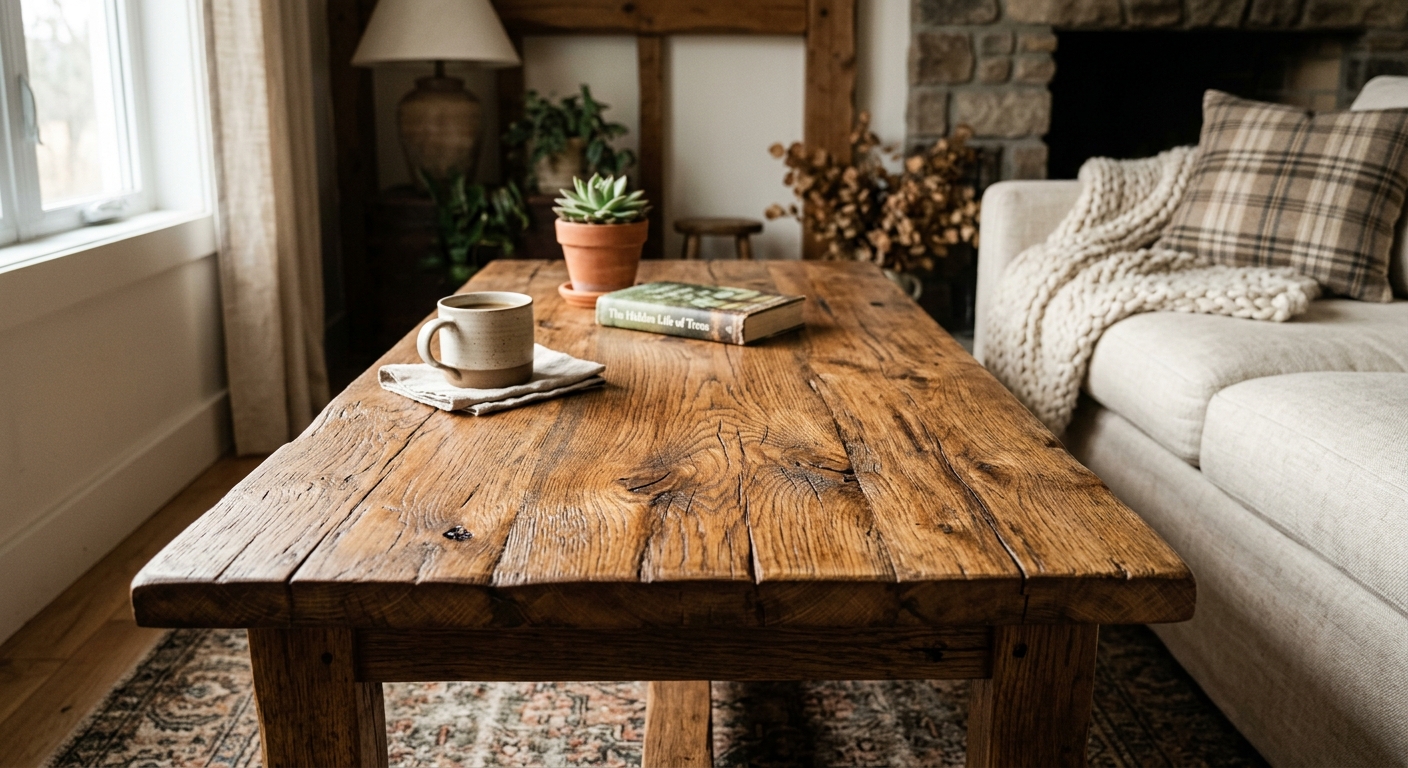
The nail holes, knots, and color variations in reclaimed wood aren't flaws — they're the features that make each piece one of a kind.
Caring for Reclaimed Wood Furniture
Reclaimed wood is low-maintenance, but a few habits will keep it looking its best:
- Dust regularly with a soft, dry cloth
- Keep away from direct sunlight to prevent fading
- Use coasters and placemats to protect the surface
- Apply furniture wax or oil once a year to nourish the wood
- Avoid harsh chemical cleaners — a damp cloth is usually all you need
Where Reclaimed Wood Shines
Reclaimed wood works beautifully for coffee tables, bed frames, nightstands, serving trays, and bathtub caddies. These are pieces that serve as focal points in a room — the kind of furniture that guests notice and ask about. The character of the wood makes each piece a conversation starter.
When you choose reclaimed wood furniture, you're not just buying a table or a bed frame. You're bringing a piece of history into your home — one that will continue to age beautifully and can be passed down to the next generation.